You Weren’t Meant To Do It Alone
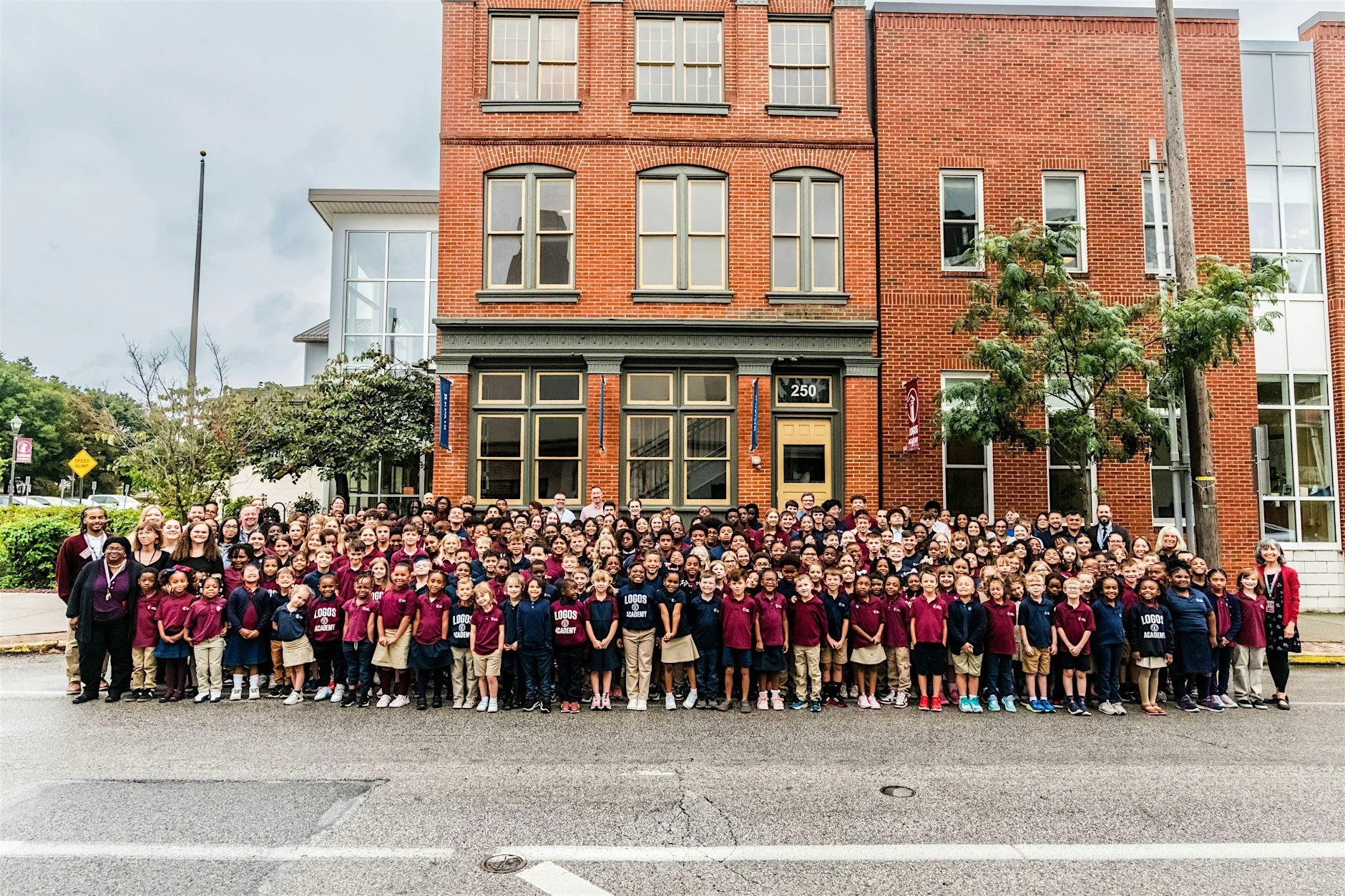
Turning a vision for change into something of real impact requires people. The right people.
Good people are among the most important assets in achieving Unlikely Good. I know this from firsthand experience with some really great people on the teams I lead.
A crossroads was staring me down in 2023. I was in my tenth year as CEO of Logos Academy. We appointed Michael Hornbaker as head of school in 2022 to oversee school operations, enabling me to focus primarily on vision, strategy, and major fundraising initiatives for all Logos-related entities.
This also enabled me to better support Otto Monroy and our social enterprise efforts at LogosWorks, which we launched in 2020. LogosWorks had grown to include our Chiefs and Clergy Partnership, the York County SafetyCollab, LogosWorks Properties, and its consulting arm, LogosWorks Partners.
The crossroads started to emerge as I felt an inner tension about my life’s passion and calling.
In 2023, Living Word Community Church asked me to consider becoming their next lead pastor. As an ordained Christian minister, I loved the Church and had always considered my nonprofit work as an extension of the Church’s ministry. I was intrigued by the opportunity to serve at Living Word, but I didn't feel that my work at Logos Academy and LogosWorks was finished.
I began to wonder if it would be possible to lead both organizations.
After all, I had seen other leaders manage organizations with much larger budgets and staff.
It was timely that I had recently read Rocket Fuel by Gino Wickman and Mark Winters. That book helped me to see that some of the most effective organizations understand that they need the gifts of two leaders: a visionary and an integrator. The visionary tends to focus on leading by championing the vision, while the integrator builds the systems to implement the vision.
The lessons from Rocket Fuel taught me that my leadership gifts were better suited to visionary roles than to operational ones. It is essential to understand that the visionary role isn’t more important than an operational role. One might argue that finding gifted integrators is significantly more challenging. In addition, visionaries often struggle to implement their vision without an operational leader who can both see it and build the systems needed to make it happen.
Given the right integrator in both organizations, I began to envision what leading two organizations would look like. I started to believe it was not the craziest idea, but actually possible.
More importantly, my wife believed in me and encouraged me. If anyone could have been a skeptic, it would have been Gail. She knew intimately what it meant for me to be a pastor and what it looked like to be a nonprofit executive. Yet, she persisted in encouraging me to move forward, knowing that she and I had a strong partnership at home.
After some discussion with both boards about the possibility, the idea emerged. I would continue to serve as CEO of the Logos-related entities and as lead pastor of Living Word, splitting my weekly schedule to serve primarily as the visionary for both organizations, with limited involvement in running operations.
People often ask me how I do it. That’s the wrong question. The answer is not in any giftedness I possess.
The better question is: Who are the people on your team, and where did you find them?
The Right People Make All the Difference
Achieving Unlikely Good will require you to build an unlikely team. You will need people with diverse skills, surprising capacities, and strengths in those areas where you are not gifted.
This is especially true for people serving as the visionary. The visionary without a team that can execute and integrate a vision is nothing more than a dreamer who won’t get things done.
You will need the right people to get you where you want to go.
As someone who often occupies the role of visionary, I haven’t always known the exact destination we wanted to take the organization to. The endpoint was not always precise, but the general direction was clear and affirmed by people aiding the launch.
Like planning a cross-country road trip, myriad roads can get you there. It is doubtful that any visionary leader could have predicted the winding path that led them to achieve Unlikely Good.
What each of those visionaries would tell you, though, is that it wasn’t necessarily a master blueprint or some exceptional technical skill that created a perfect road map.
It was the people, the team they assembled, that made all the difference.
That principle applies far beyond organizational leadership. Whatever you are trying to accomplish, you probably don't need to know every step of the journey. But you do need to recognize the people who can help you take the next steps.
Finding and recruiting the right people makes all the difference in the world. They come along at just the right time, see your vision, commit to your mission, and give the cause a boost that helps it to mature in ways you couldn’t imagine.
You may have a passion to solve that impossibly complex problem that is breaking your heart. Without the right team of people, it is highly improbable that you will accomplish Unlikely Good.
You were not meant to do great work alone. You can’t.