The Day I Stopped Believing in Simple Solutions
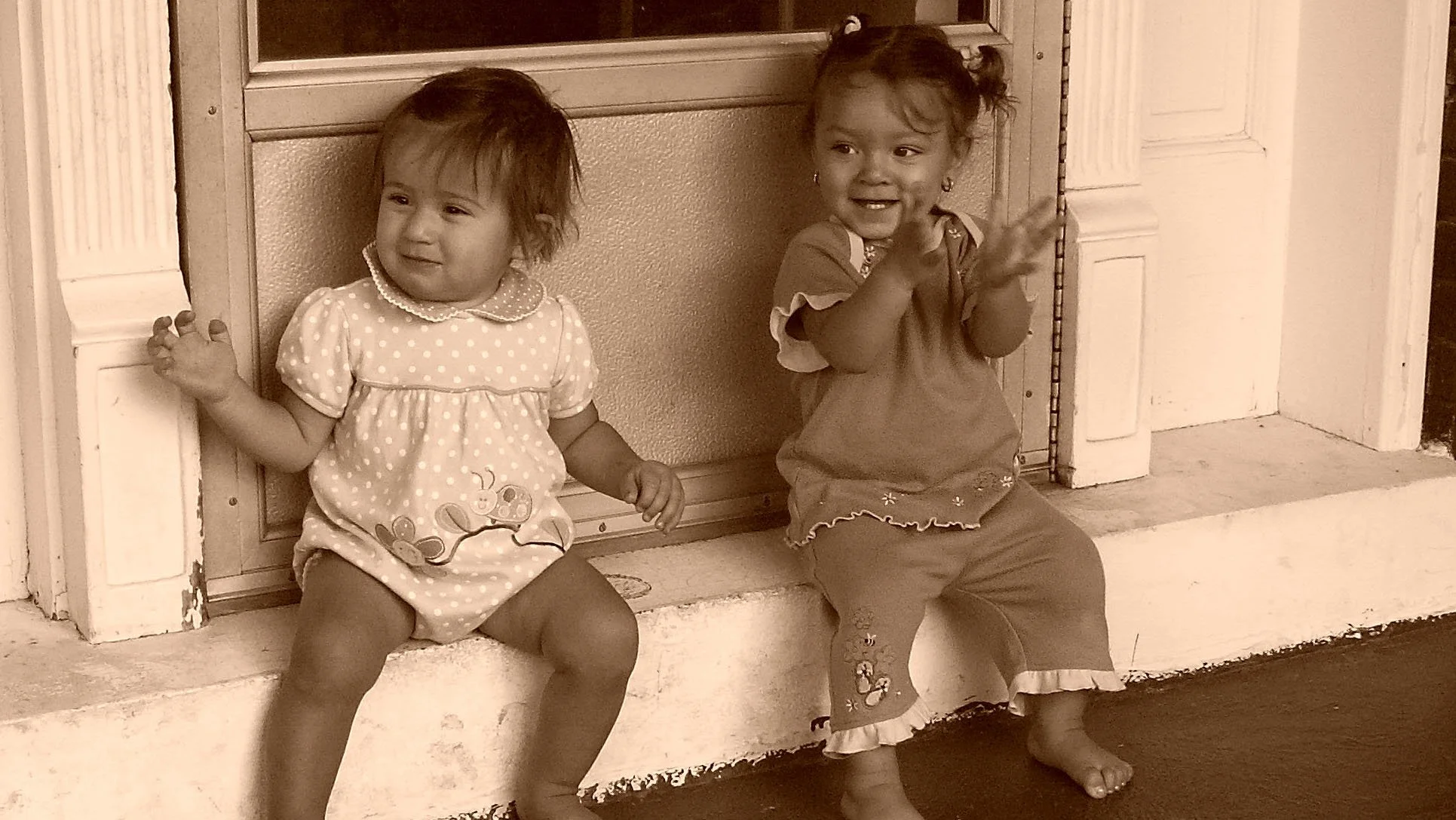
My daughter, Amelia (left), sitting with her friend Darisabel (right).
I will never forget the morning I read the front-page headline of the York Daily Record announcing the death of a local two-year-old. There were two mugshots: a man and a woman charged with the girl's death. I did not recognize the man, but something about the woman looked faintly familiar. It wasn't until my wife, Gail, came bursting through the door later that morning, sobbing, that the details connected. Our little neighbor, Darisabel Baez, was gone. She had been beaten to death at the age of two. On Saturday, April 12th, 2008, I led her funeral service. Her short life and traumatic death changed the trajectory of our family and permanently altered the way I think about leadership, community, and the limits of simple solutions.
Wicked Problems
Wicked problems are community problems that are impossibly complex, with no clear solutions and no single identifiable cause. The concept of a wicked problem reframed the way I approach community challenges. In 1973, design theorists Horst Rittel and Melvin Webber suggested, "Wicked problems are never solved — at best, they are only re-solved, over and over again."
In my book Unlikely Good, I wrestle with the complexity of Darisabel’s story. Her death was clearly a form of moral wickedness. But as a social problem, it resists simple explanation. The intersecting factors that contributed to her vulnerability included poverty, distrust of police, insufficient education, drugs, a history of abuse in the perpetrator's own childhood, fatherlessness, and language barriers.
None of those factors alone caused her death. Together, they created the conditions for it. This is the nature of a wicked problem: it has no single root cause and no simple solution. As I write in the book, "all of the problems that break our hearts are likely wicked, impossibly complex problems to solve."
The trap of the specialist
Modern community organizations prize deep expertise, and for good reason. But I have seen how narrow specialization repeatedly works against the kind of community leadership needed to solve wicked problems. In Unlikely Good, I make this point directly:
"Many leaders develop deep expertise in their fields, but this specialized knowledge can be too narrow when addressing community challenges. For instance, an accountant may not be trained in educational issues, yet as a school board member, they could influence important decisions about local schools."
A zoning attorney doesn't automatically understand public health. A pastor, and I say this as one, is not necessarily trained to advise on child abuse prevention policies. Yet, community leadership demands exactly this kind of range. The answer is not to become an expert in everything. It is to become a generalist: someone with the wisdom to navigate the intersection where these thorny issues meet and impact one another.
Living in the intersection
Economic development, poverty, local policy, community policing, and education don't just coexist; they overlap, compound, and influence each other in layered ways. A leader who understands only one small piece of the challenge may misread the whole.
An effective generalist will learn to "live in the intersection." That means resisting the urge toward simple solutions and developing the patience to sit with complexity. Over the years in York, I have witnessed leaders with no proximity to economic development challenges propose policies that simply push poverty into another neighborhood. Wicked problems demand more insight and discernment than that.
One of the strategies I have used to hone my skills as a generalist is to read widely. I read a diverse range of articles and books on a broad range of topics, such as politics, finance, community development, religion and theology, history, business strategy, and anything else I believe will round out my thinking.
The indispensable role of lived experience
I would be remiss to suggest one final strategy every leader should employ to understand community problems. One of the most powerful corrective measures to oversimplified thinking is proximity to the people experiencing the community problem. These individuals, or "primary actors," offer an invaluable perspective. I highlight this in Unlikely Good,
"Don't assume you understand the solution if you haven't talked to the very people experiencing the problem."
This is a check against the pride that convinces us we already know the answer before we have paused to listen.
The problems that plague our communities are complex. The generalist leader does not have all the answers, but if they are willing to think broadly, pay attention to intersecting factors, and ask good questions, they will likely develop the kind of wisdom needed to avoid the mistake of simple solutions.