From Riot to Relationship: Presence, Dialogue, and Hope for a Better Future
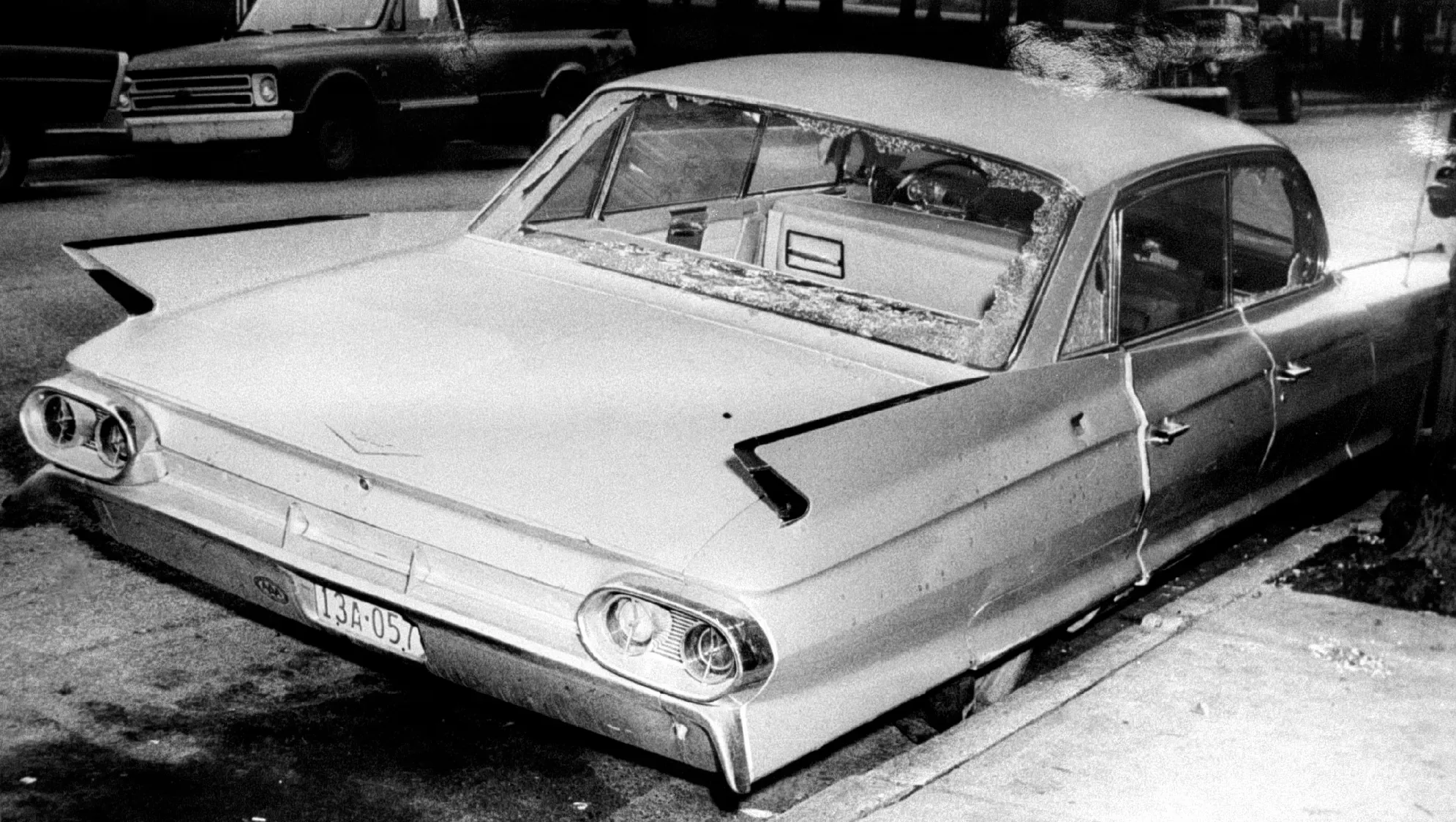
The car Lillie Belle Allen was riding in on July 21, 1969, in York, Pennsylvania.
If you want to understand a community’s struggles, you need to get close. Presence enables you to have a greater perspective.
Moving to York City in 2006 was one of the best decisions we made as a family. We got close, saw the city firsthand, met the people, and fell in love. The problems of the city were not over “there” but became our own. School issues, drug dealing, domestic violence, hopelessness, and even child abuse were right on our doorstep.
To truly understand York’s struggles, I needed to understand its history. The following is an excerpt from the chapter titled, Presence, from my book, Unlikely Good:
———————————————————————————————————————————————————————————————————————-
Lillie Belle Allen was a 27-year-old Black woman from Aiken, South Carolina, visiting York with her parents in July 1969.
Henry Schaad was a 22-year-old white police officer with just 10 months on the York City Police Department. He was assigned to patrol the streets of York in one of the most tumultuous times in the City’s history.
Events in the summers of 1968 and 1969 were a powder keg that finally exploded in race riots in York City in July 1969, ignited by a report from a 12-year-old Black youth who claimed he had been doused with gasoline by a white gang. The story was later found to be fabricated by the boy who had burned himself playing with a lighter. There was no turning back.
Rioting broke out. Heavily armed Black people, rebelling after years of discrimination, and organized white gangs attacked each other throughout the city. The white gangs were backed by the police. A seventeen-year-old Black male, Taka Nii Sweeney, was shot by an unseen gunman.
On July 17th, as he patrolled the City in an armored vehicle, Officer Henry Schaad was shot when the truck came under fire. He died two weeks later.
White gangs prepared for revenge, and neighborhoods began to be barricaded.
On July 21st, Lillie Belle Allen was riding in a car with her family, driven by her younger sister, Hattie Dickson, on Newberry Street. They were heading for a grocery store when Hattie was alarmed at seeing a white gunman hanging out of a window. She proceeded to turn around the car when it stalled in the intersection. More armed white men emerged.
Allen hopped out of the car to take over driving duties. She waved her arms, crying, “Don’t shoot” to the gunman. Gunfire erupted, with more than one hundred rounds fired, and she was killed.
Calm would eventually be restored after a National Guard presence, but no arrests were made in the deaths of Schaad or Allen. This traumatic history would simmer under the surface well into the future.
Over thirty years later, in 2001, 10 white men were charged with Lillie Belle Allen’s murder. Notable among them was then-sitting York City Mayor, Charlie Robertson, who was later acquitted.
At the conclusion of the trials, nine white men served prison time in Allen’s death, and three Black men for Schaad’s death.
When my family moved to York in 2004, this history continued to hang over York City like a dark, foreboding cloud. In April 2015, as news footage of burning cars and shattered storefronts in Baltimore flooded the airwaves, the National Guard rolled in to restore order after the death of Freddie Gray at the hands of police. The unrest was less than an hour from York— a city with scars of its own from those events in the late 1960s. Each headline and news story of Baltimore’s unrest felt like a warning shot, echoing through our community. The tension in the nation was palpable, a current running just beneath the surface, threatening to erupt at any moment.
With the memory of York’s violent history never far from mind, I felt the urgency rising. Something had to be done before chaos spilled over into the streets of York, and it became the next flashpoint. Trials for the Baltimore City police officers accused in Freddie Gray’s death continued into the summer of 2016. The tension in York was rising. I distinctly remember conversations with Black clergy, including Bishop Carl Scott, Mike Jefferson of Crispus Attucks York, Dr. Larry Walthour, and Pastor Bill Kerney, then president of the Black Ministers Association. We agreed to meet to determine what could be done. To this day, Pastor Kerney says, “We were led by God to begin a dialogue.”
As we included other Black and white pastors in the conversation, we agreed that we needed to organize a meeting with local police. York County was then policed by eighteen different townships and regional departments, which made convening everyone challenging.
I had a relationship with York City Police Chief Wes Kahley and reached out to him with an idea he found agreeable. We would meet in September 2016, at Logos Academy, to have an open conversation between Black leaders and local police. I would facilitate the conversation to maintain an open, honest, and respectful conversation. Chief Kahley would gather other local police departments. The meeting would be private and would not include media or politicians.
Approximately seventy-five pastors and local police chiefs gathered that September night at Logos Academy. It was the most diverse gathering of church leaders I had ever attended, comprising Black, white, and Latino ministers from various Christian denominations.
Police sat on one side of the auditorium, and the clergy sat on the other. The tension in the room was thick. Chief Kahley confessed to me, before the meeting, that he feared police would be barraged with anger. I assured him I would do my best to maintain the dialogue.
What happened that evening was astounding. In my opinion, I don’t believe it can be overstated how important this meeting was for our future in York.
Pastor Ramona Kinard recounted a heartbreaking story of how her son had been repeatedly followed each night by a police cruiser as he drove, to and from work, through Springettsbury Township. Chief Dan Stump, then Chief of the Springettsbury Police Department, responded with an apology to Pastor Ramona. That simple act released the pressure from the room.
Chief Mark Bentzel of the Northern York Regional Police Department also confessed to the room, “Sometimes police get it wrong.”
Over and over, each police chief responded with wisdom and warmth. The clergy were honest but open to listening to what the chiefs had to say. The meeting concluded after three hours of discussion.
After the meeting, Chief Kahley came to me and told me the chiefs told him how encouraged they were. I was told, “We have to meet again.”
Thus began what we call our “Chiefs and Clergy Partnership.” This group has continued to meet monthly, to build relationships and continue dialogue since that night in September 2016. Almost ten years later, the group remains vibrant and active. Authentic friendships have been built between police and Black leaders. Trust is being built, and York is better for it.
The relationship between our local police departments and clergy has been vital in 2025, a particularly tragic year for local law enforcement.
In February of that year, West York Borough police officer Andrew Duarte was killed responding to a volatile hostage situation at one of our local hospitals. Just a few short months later, Detective Sergeant Cody Becker, Detective Isaiah Emenheiser, and Detective Mark Baker, all of the Northern York County Regional Police Department, were killed in an ambush in a domestic situation. Two other officers were also wounded but survived.
Our local police were able to lean on relationships with numerous clergy and churches, which joined with the broader community, to provide care and support.
The unity and trust that seemed improbable years prior have become Unlikely Good that continues to make a difference in York County.