The Unglamorous Truth About Nonprofit Sustainability
It takes courage to tackle the problems that need a dose of Unlikely Good in your community. Do it long enough, and your nonprofit cause will start to develop a good reputation, maybe even a glowing, glamorous one.
But there is a dark underbelly to the nonprofit world, one filled with unglamorous truths. It takes stubborn endurance to survive them.
Over the years of nonprofit leadership, I have personally witnessed the following unglamourous truths:
Many donors or funders don't want, or are restricted by rules, to give money toward annual operations.
Many philanthropic sources are restricted to creating new programs or building new facilities.
It can be more challenging to keep committed donors than exciting new ones. Put another way: the front door is open while the back door is also wide open.
Nonprofit development operations are usually most successful at securing new, small gifts. They struggle to grow those gifts into larger contributions.
Nonprofits will pursue funding sources (specifically grant funding) that are not directly linked to their core cause. This can cause mission drift.
Nonprofit leaders get burned out by the annual fundraising fatigue and the stress it creates.
Effective fundraisers get poached by other organizations eager to find good fundraisers.
Donors become weary from nonprofit survival fundraising asks (ie “The Titanic is sinking. Please send money.”)
I would love to tell you that solving the financial sustainability of the nonprofit sector has a silver bullet. That would be a lie. Suffice it to say that the answer to that dilemma is complicated.
One indisputable solution is cultivating donors who embrace your mission and are deeply committed. I would love to share the story of one of those people, a friend of Logos Academy, who became a game-changer for us in solving our struggle to be sustainable.
The People Behind Unlikely Good
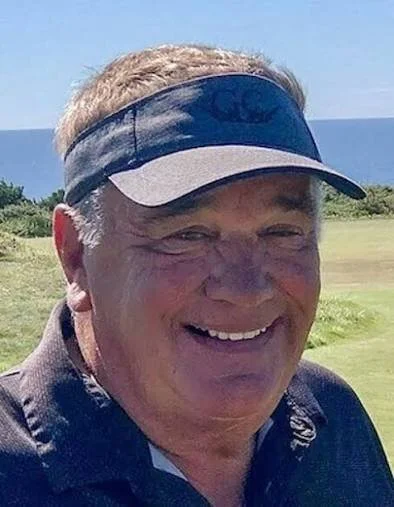
The late Bob Rae was the husband of Connie Rae, one of the two women who founded Logos Academy. Together, Bob and Connie owned a company that specialized in funeral insurance. Bob was a former funeral home director who became the visionary, hard-driving CEO who grew the company to have a nationwide footprint and reputation.
The dream of Logos Academy would prove to be financially costly.
Logos launched in 1998 with fourteen students in kindergarten and first grade. What started as a relatively small budget in the hundreds of thousands of dollars was like a snowball rolling downhill, eventually growing to a now $4 million per year operation with a $20 million campus.
To build a high-quality program and campus like Logos Academy for families who can’t afford to pay the full cost of the program (over $16,500 per student in 2025) is to create a God-sized problem. But that was Traci and Connie’s vision.
This means that there is an unfunded gap that requires substantial scholarship funding. This unfunded gap has grown to roughly $3 million per year.
Dreams like Traci's and Connie’s are far more costly than you can imagine.
Someone said that you should dream a dream so big that only God can make it happen.
The Apostle Paul wrote, in Ephesians 3:20, that God is “able to do immeasurably more than we can ask or imagine.”
In 2001, Pennsylvania legislators passed a bipartisan educational tax credit program that allowed business owners to receive up to 90% tax credit for contributions made to an approved nonprofit scholarship organization. Logos Academy immediately created an approved scholarship organization to leverage the program.
Bob Rae utilized his connections with funeral insurance providers to connect the school with companies that had substantial Pennsylvania tax liabilities. The 90% tax credit was desirable to those businesses, as it allowed them to contribute to a cause that felt meaningful.
Those tax credit contributions were lifeblood for Logos Academy’s growth and sustainability.
Bob Rae passed away unexpectedly in December 2023. For twenty years, Bob used his influence and connections to connect more than $14 million in scholarship contributions from those companies.
If you had the pleasure of knowing Bob Rae, you would learn that he could be forthright with a bit of a rough bark. Sometimes, I would call him and he would answer, “What do you want?” with his gruff tone.
It didn’t take me long to understand two things. First, Bob did what Connie told him to do, and I often used this against him. Second, behind that gruff tone was a man who cared deeply about kids.
Two sisters, both Logos Academy graduates, Yatzi and Conchita, spoke at Bob’s funeral about his love for them and the opportunity he provided. Bob used his influence to care about kids who simply needed an opportunity.
He never asked for public recognition or naming rights in his giving. He did tell me the only memorial he would accept was a golden urinal with his name on it.
We have not fulfilled that request.
The visionary dream of Logos Academy would have been unlikely if a financial expert had forecasted the long-term cost. It may have stopped everyone in their tracks.
It was Bob Rae’s heart and influence that helped fund Unlikely Good at Logos Academy.
The nonprofit sector could use more people like Bob who are willing to confront the unglamorous truths about nonprofit sustainability.